
Dental Implants in Hinjawadi, Pune
What Are Dental Implants?
Dental implants are artificial tooth roots that are placed in the jawbone to support a replacement tooth, bridge, or denture. They are designed to replace missing teeth and can help restore chewing function, comfort, and the appearance of your smile. Dental implant treatment usually involves assessment and planning, implant placement, healing, and placement of the final dental restoration.
When Are Dental Implants Recommended?
Dental implants may be considered when one or more teeth are missing and you want a fixed tooth replacement. They may be suitable for people who have lost teeth because of tooth decay, gum disease, dental trauma, or other causes. Your dentist will assess the gums, available bone, overall oral health, and the condition of nearby teeth before deciding whether implants are appropriate.
- One or more missing teeth
- A tooth that cannot be restored and needs removal
- Difficulty chewing because of missing teeth
- A desire for a fixed alternative to a removable denture
- Replacement of a previously lost tooth
What Are the Benefits of Dental Implants?
For suitable patients considering dental implants in Hinjawadi, treatment can provide a stable way to replace missing teeth. Implants can help improve chewing ability and support a natural-looking smile. Unlike removable dentures, an implant-supported tooth is anchored in the jawbone. Implant treatment can also support a dental crown, bridge, or denture.
- Helps restore chewing function
- Provides a fixed tooth replacement
- Can improve the appearance of a missing-tooth area
- Can support crowns, bridges, or implant-supported dentures
- Can help maintain the tooth space and surrounding oral structures
How Is Dental Implant Treatment Done?
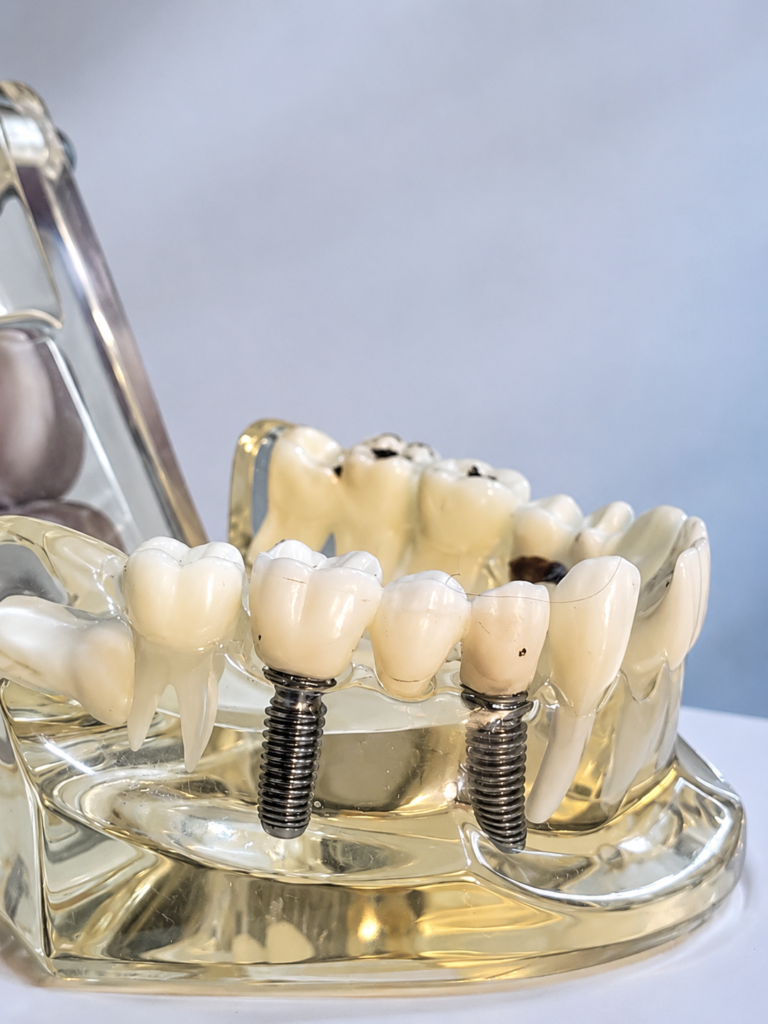
Dental implant treatment is planned in stages and the exact approach depends on the patient’s oral health, bone condition, and number of missing teeth. The process generally includes an examination and treatment planning, implant placement, a healing period, and placement of the final restoration.
1. Examination and treatment planning
Your dentist examines the teeth and gums and evaluates the available jawbone. Dental X-rays or 3D imaging such as CBCT may be recommended when needed for treatment planning.
2. Implant placement
The dental implant is surgically placed into the jawbone at the planned site. Local anaesthesia is commonly used to keep the procedure comfortable.
3. Healing and integration
The implant is allowed to heal and integrate with the surrounding bone. The healing period varies depending on the individual case and treatment plan.
4. Placement of the final tooth
Once healing is adequate, an abutment and custom-made crown, bridge, or denture may be attached to the implant.
Who Can Get Dental Implants?
Dental implants may be an option for adults who have one or more missing teeth and have suitable oral and general health for the procedure. Adequate bone and healthy gums are important for successful implant treatment. Some patients with reduced bone volume or gum problems may still be candidates after appropriate treatment and planning. A dental examination and imaging are needed to determine whether implants are suitable for your individual situation.
- Missing one or more teeth
Adequate or treatable jawbone support
Healthy or treatable gums
Good oral hygiene
Willingness to maintain regular dental care
Dental Implants vs Other Tooth-Replacement Options.
Dental implants are one option for replacing missing teeth. Depending on your oral health, number of missing teeth, bone condition, budget, and personal preferences, your dentist may also discuss alternatives such as a fixed dental bridge or removable denture. Each option has different benefits, limitations, treatment requirements, and maintenance needs. Your dentist can help you choose the most appropriate option after a clinical examination.
Dental Implant
- Fixed replacement
- Supported by an implant in the jawbone
- Usually requires a surgical procedure and healing period
Dental Bridge
- Fixed replacement supported by neighbouring teeth or implants
- Usually does not require implant surgery
- Treatment depends on the condition of the supporting teeth
Removable Denture
- Can replace several missing teeth
- Can be removed for cleaning
- May require adjustment or replacement over time
Do Dental Implants Hurt?
Dental implant placement is performed under local anaesthesia, so you should not feel pain from the surgical procedure itself. Some soreness, swelling, or mild discomfort can occur after treatment and usually improves as healing progresses. Your dentist will provide appropriate aftercare instructions and advise you about pain management based on your procedure and individual needs.
How Long Do Dental Implants Last?
Dental implants are designed to be a long-term tooth-replacement option, but their longevity varies from person to person. Oral hygiene, gum health, smoking, bite forces, general health, and regular dental check-ups can all affect the long-term health of an implant. The crown or other restoration attached to an implant may need maintenance or replacement over time even when the implant itself remains healthy.
Do You Need a Bone Graft for Dental Implants?
A bone graft may be recommended when there is not enough suitable jawbone to support an implant in the planned position. This can happen after long-standing tooth loss, infection, trauma, or bone loss. Not every implant patient needs a bone graft. Your dentist may use dental X-rays or CBCT imaging to assess the available bone and determine the appropriate treatment plan.
How Much Do Dental Implants Cost in Hinjawadi?
The cost of dental implants in Hinjawadi varies depending on the number of teeth being replaced, the type of implant and restoration selected, the condition of the gums and jawbone, and whether additional procedures such as tooth extraction or bone grafting are required. At Samarth Dental Clinic, the treatment plan and estimated cost are discussed after a dental examination and appropriate imaging. This helps you understand the procedures involved and the options available for your individual case.
Dental Implant Aftercare and Maintenance
Good oral hygiene and regular dental check-ups are important for maintaining the health of dental implants and the surrounding gums. Follow the aftercare instructions provided by your dentist after implant surgery. Brush and clean between your teeth and around the implant restoration as advised. Avoid smoking and attend recommended follow-up appointments so your dentist can monitor the implant, gums, and restoration.
- Maintain regular brushing and interdental cleaning
- Follow your dentist’s post-treatment instructions
- Attend scheduled follow-up appointments
- Avoid smoking, particularly during healing
- Report persistent pain, swelling, bleeding, or loosening of the restoration
Why Choose Samarth Dental Clinic for Dental Implants in Hinjawadi?
Choosing an implant provider is an important decision. At Samarth Dental Clinic in Hinjawadi, implant treatment begins with an assessment of the teeth, gums, jawbone and overall oral health. Dr. Gaurav Mali, B.D.S. (registration A-17638), has more than 18 years of clinical experience and has completed basic and advanced courses in complete dental implant treatment. Learn more about Dr. Mali and the clinic team.
The dentist explains suitable tooth-replacement options, expected stages and maintenance needs after examining your individual case. Our approach focuses on diagnosis, treatment planning and follow-up care.
- Clinical examination and treatment planning
- Assessment of gum health and available bone
- Dental X-rays or CBCT imaging when clinically required
- Individualized implant and restoration planning
- Explanation of treatment stages and aftercare
- Convenient location in Hinjawadi, Pune
Frequently Asked Questions About Dental Implants
Are dental implants painful?
Dental implant placement is performed under local anaesthesia, so pain during the procedure is generally controlled. Some soreness, swelling, or discomfort may occur after surgery as the area heals. Your dentist will provide specific aftercare and pain-management instructions for your case.
How long does a dental implant take?
The overall treatment time varies depending on the number of implants, bone condition, healing, and the type of restoration required. Some cases can be completed in fewer stages, while others may require additional procedures or a longer healing period. Your dentist can provide an estimated timeline after examination and treatment planning.
Are dental implants better than dentures?
Dental implants and dentures are different tooth-replacement options. Implants provide a fixed, implant-supported solution, while dentures are removable. The most suitable option depends on your oral health, bone condition, number of missing teeth, treatment requirements, and personal preferences.
How do I know if I am suitable for dental implants?
A dental examination is needed to determine whether implants are suitable for you. Your dentist will assess your gums, jawbone, remaining teeth, oral hygiene, and overall health, and may recommend dental imaging before creating a treatment plan.
Book a Dental Implant Consultation in Hinjawadi, Pune
If you are considering dental implants for one or more missing teeth, a consultation can help determine whether implant treatment is suitable for you. At Samarth Dental Clinic, Hinjawadi, we assess your oral health, bone condition, and tooth-replacement needs before recommending an appropriate treatment plan.
Book an appointment with Samarth Dental Clinic to discuss your dental implant options.